<Back to news
23 Sept 2026
3–5 Years: Growing Confidence Through Play
The Little Gym Parent’s Guide to Physical Development
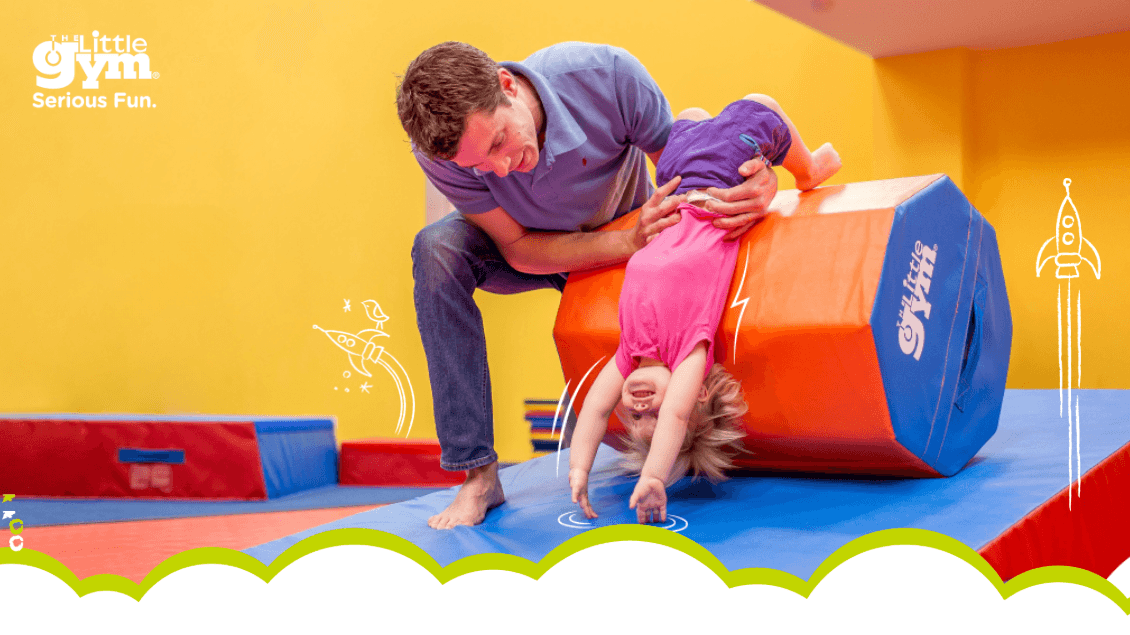
“Watch me!”
If there is one phrase that captures the preschool years, it might be those two words.
Watch me jump. Watch me climb. Watch me balance. Watch me do it again. And again. And again.
What may look like endless energy and constant demands for attention is actually a fascinating period of development.
Between the ages of three and five, children become increasingly confident, coordinated and independent movers. They begin to combine individual skills: running, jumping, climbing, balancing, throwing and catching into more complex movement patterns.
At the same time, their fine motor skills are developing rapidly, helping them draw, build, cut, dress themselves and prepare for the practical demands of school.
Movement is helping them become not just stronger, but more capable and confident.
From Movement to Mastery
By the preschool years, many children have moved beyond simply learning how to move.
Now they’re learning how tocombine movements.
A child might run towards an obstacle, jump over it, land, change direction and continue running.
They might climb a playground structure, balance along a beam and then jump down.
They might chase a ball, stop, turn, throw and then run after it.
These activities require the brain and body to coordinate multiple actions together.
Strength, balance, timing, body awareness and concentration all come into play.
And the more children practise, the smoother these movements often become.
What once required enormous concentration can gradually become almost automatic.
What You May Notice Between 3 and 5
During these years, children often become increasingly confident with:
- Running and changing direction
- Jumping forwards
- Hopping on one foot
- Balancing
- Climbing
- Pedalling
- Throwing and catching
- Navigating playground equipment
- Dancing and moving to rhythm
- Beginning to skip
- Using their hands with greater precision
But physical development isn’t just about what a child can do.
It’s also abouthow they approach challenges.
A child who once avoided climbing may suddenly decide:
“I’m going to try!”
A child who couldn’t hop may practise until they can. A child who struggled to catch a ball may begin to anticipate where it is going.
Each new success creates another opportunity for confidence.
Learning to Plan Movement
One of the exciting changes during the preschool years is the growing ability toplan movements before carrying them out.
Children are increasingly able to think about what they want to do and adjust their bodies accordingly.
Imagine a child approaching a climbing frame. They need to decide: Where should I put my foot? Where can I put my hands? How do I get across? What happens if I move this way?
This is sometimes described asmotor planning.
Children are learning to organise and sequence movements to achieve a goal. Obstacle courses, climbing, balancing games, dance and imaginative movement play can all provide opportunities to practise these skills. And the wonderful thing is that children rarely experience it as “practice.” To them, it is simply play.
Fine Motor Skills: Small Movements, Big Importance
While gross motor skills are becoming more advanced, your child’s hands and fingers are developing greater strength and control too.
You may notice your child becoming increasingly confident with:
- Drawing
- Colouring
- Holding pencils
- Using scissors
- Building with blocks
- Completing puzzles
- Threading beads
- Using playdough
- Turning pages
- Fastening buttons and zips
- Using cutlery
These skills are important for everyday independence. They also help prepare children for the physical demands of school. Holding a pencil, using scissors, opening lunch containers and managing clothing all require fine motor control. And just like running or jumping, these skills develop throughopportunity, repetition and play.
Why Physical Development Matters for School Readiness
When parents think about school readiness, they often think about whether their child knows their letters, numbers or colours.
But school readiness is much broader than academic knowledge. Children also need physical skills to participate confidently in everyday classroom life.
They may need to:
- Sit comfortably during activities
- Maintain posture
- Hold and control a pencil
- Use scissors
- Open containers
- Put on coats
- Manage shoes and clothing
- Carry their belongings
- Move safely around the classroom
- Participate in PE and playground activities
Physical development therefore plays an important role in helping children feel capable and independent when they begin school.
A child who feels comfortable using their body has another important tool for learning.
Movement and the Developing Brain
By the preschool years, movement is supporting more than physical development. Active play also provides opportunities to practise skills such as attention, memory, planning, self-control and problem-solving. These are often referred to asexecutive functions. Consider a simple obstacle course.
A child might need to remember the sequence:
Jump → crawl → balance → climb → throw.
They need to listen to instructions. Wait their turn. Remember what comes next. Control their excitement. Adjust if something doesn’t work. And complete the challenge. That’s a lot of thinking happening alongside movement.
Research into executive function highlights the importance of these mental skills for learning and everyday life.
Movement gives children opportunities to practise thinking while doing.
The Power of “Watch Me!”
There is something very special about the pre-schooler’s desire to have someone watch them.
“Watch me!”
“Look!”
“Did you see that?”
“Again!”
It can sometimes be tempting to respond with a quick:
“Yes, well done!”
before getting back to whatever you were doing. But those moments matter. Your child isn’t necessarily asking you to judge their performance. They’re sharing an achievement with you.
They’re saying:
“Look what I can do.”
Your attention and encouragement can reinforce the sense that their effort matters. And that can encourage them to keep exploring and trying.
Confidence Comes From Trying
Pre-schoolers don’t master every skill immediately. They fall. They wobble. They miss. They get frustrated. They say:
“I can’t do it!”
And then, sometimes, five minutes later:
“LOOK! I DID IT!”
That journey is incredibly valuable.
Children begin to discover that skills aren’t necessarily something you can either do or can’t do.
They can improve. They can practise. They can ask for help. They can try a different approach. They can keep going. This is where physical development becomes closely connected toresilience.
Celebrate Effort, Not Just Ability
How we respond to children’s physical achievements can influence how they think about learning.
Instead of always saying:
“You’re so good at that!”
try highlighting the process:
“You kept trying.”
“You worked that out.”
“You practised until you got it.”
“That was tricky, but you didn’t give up.”
This helps children recognise that progress comes through effort and practice. It also gives them permission to struggle. And that’s important. Because if children believe they have to be immediately “good” at something, they may be less willing to attempt activities they find difficult.
Confidence doesn’t come from always getting it right. It comes from discovering that you can cope when you don’t.
Movement Through Imaginative Play
Pre-schoolers have extraordinary imaginations. And imagination can turn movement into an adventure. The living room becomes a jungle. The garden becomes the moon. A cushion becomes a stepping stone over a crocodile-filled river. A climbing frame becomes a pirate ship. A line on the floor becomes a tightrope.
This kind of imaginative play encourages children to move in different ways while also developing creativity, problem-solving and communication.
Try saying:
“How can we cross the river without touching the water?”
Suddenly, your child isn’t simply balancing.
They’re solving a problem.
Try This at Home
Turn movement into an adventure
Pretend you’re dinosaurs, astronauts, pirates or jungle explorers.
Can you stomp? Crawl? Jump over rivers? Balance across bridges?
Encourage creative fine motor play
Drawing, colouring, playdough, threading, building and simple crafts help strengthen hand control.
Play with balls
Roll, throw, catch, kick and chase. Use different sizes and distances as your child becomes more confident.
Create simple challenges
Use cushions, tape lines, tunnels and safe household objects to create an obstacle course. Let your child help design it.
Dance
Put on music and move together. Copy each other’s movements. Move fast. Move slowly. Freeze. Change direction. Dance is a wonderful way to combine rhythm, coordination, balance and creativity.
Encourage independence
Give your child time to dress themselves, put on shoes, carry belongings and help with everyday tasks. It may take longer—but they’re practising important skills.
Keep Movement Varied
Children don’t need to become experts in one activity at this age. They benefit from experiencing lots of different types of movement.
Encourage:
- Running
- Climbing
- Jumping
- Balancing
- Swinging
- Dancing
- Throwing
- Catching
- Rolling
- Crawling
- Hopping
Variety helps children develop adaptable movement skills and discover what they enjoy.
And enjoyment matters.
A child who associates movement with fun is more likely to want to keep moving.
Every Pre-schooler Develops Differently
Some children seem fearless. They climb everything. Jump from everything. Run everywhere. Others prefer to observe. They may take longer to join in or need encouragement before trying something new. Some children develop ball skills quickly. Others are more confident with climbing or balance. Some love drawing and crafts. Others would rather spend all day outdoors.
There is no single “right” way to be a pre-schooler.
Development happens at different rates, and children have different personalities, interests and experiences. Rather than comparing your child with another child, look forprogress.
What can they do now that they couldn’t do six months ago?
What are they becoming more confident attempting?
What are they interested in exploring?
Those are much more useful questions. If you have concerns about your child’s coordination, balance or ability to participate in everyday activities, speak with your GP.
Quick Milestone Guide: 3–5 Years
| Age | What you may notice |
|---|---|
| 3–4 years | Runs confidently, jumps forwards, pedals a tricycle, climbs confidently, balances briefly on one foot, catches a large bounced ball and begins drawing simple people and shapes. |
| 4–5 years | Hops on one foot, begins developing a skipping rhythm, throws and catches with increasing accuracy, uses scissors with greater control, dresses with minimal help, draws more detailed pictures and shows improved pencil control. |
Remember:these are broad developmental guides, not deadlines. Children develop at different rates.
The Little Gym Parent Reminder
Your pre-schooler might not remember how many times they practised a skill.
They probably won’t remember how high they climbed.
But they may remember how they felt when they finally managed something they’d been trying to do.
Proud.
Excited.
Capable.
Brave.
So when those little voices call:
“WATCH ME!”
Whenever you can, watch.
Put down your phone.
Look up.
Smile.
Celebrate their effort.
Because your attention tells them something powerful:
“What you’re doing matters.”
Strong Bodies. Curious Minds. Confident Kids.
The preschool years are about much more than becoming physically capable.
Children are learning to combine movement, imagination, problem-solving and confidence.
They’re discovering what happens when they practise.
They’re learning to cope when something is difficult.
They’re becoming more independent.
And they’re beginning to understand that they can influence the world around them through their own actions.
At The Little Gym, this is at the heart of our approach.
We want children to experience movement as something joyful, purposeful and empowering.
Not because every child needs to become a gymnast.
Not because every child needs to be the fastest, strongest or most flexible.
But because every child deserves the opportunity to discover:
“Look what I can do!”
What’s Next?
The preschool years lay important foundations for the next stage of development.
As children enter the primary school years, movement becomes increasingly connected withchallenge, mastery, goal-setting and perseverance.
In the next article inThe Little Gym Parent’s Guide to Physical Development, we’ll explore:
6–8 Years: Learning Through Challenge, Practice & Persistence
We’ll look at how children develop more complex movement skills, discover the satisfaction of mastering something difficult and begin to understand one of life’s most valuable lessons:
Progress doesn’t always happen straight away—but practice makes a difference.
Sources & Further Reading
- Bandura, A. (1997).Self-Efficacy: The Exercise of Control. New York: W.H. Freeman.
- Center on the Developing Child at Harvard University. (2023).InBrief: The Science of Early Childhood Development.
- Department for Education. (2023).Development Matters. London: Department for Education.
- Diamond, A. (2013). ‘Executive Functions’,Annual Review of Psychology, 64, pp. 135–168.
- Education Endowment Foundation. (2024).Physical Development.
- NHS. (2025).Best Start in Life: Early Learning and Development.
- Piaget, J. (1952).The Origins of Intelligence in Children. New York: International Universities Press.
- World Health Organization. (2019).Guidelines on Physical Activity, Sedentary Behaviour and Sleep for Children Under 5 Years of Age. Geneva: WHO.